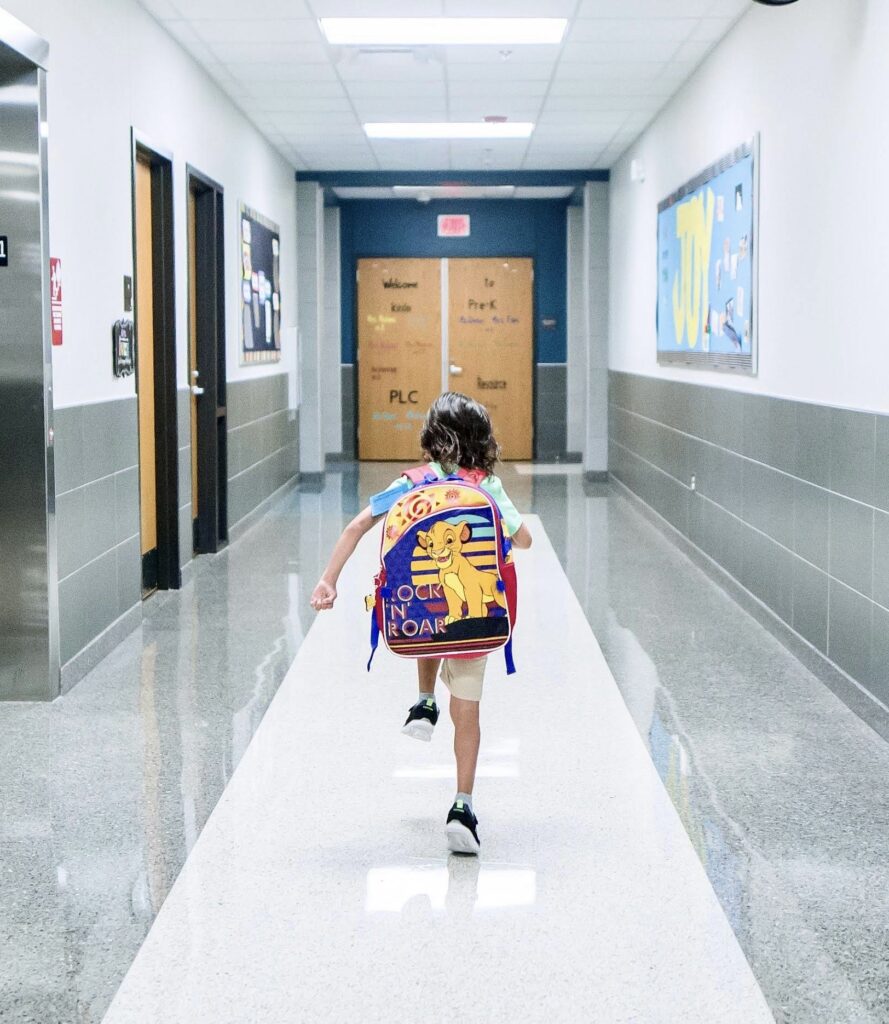
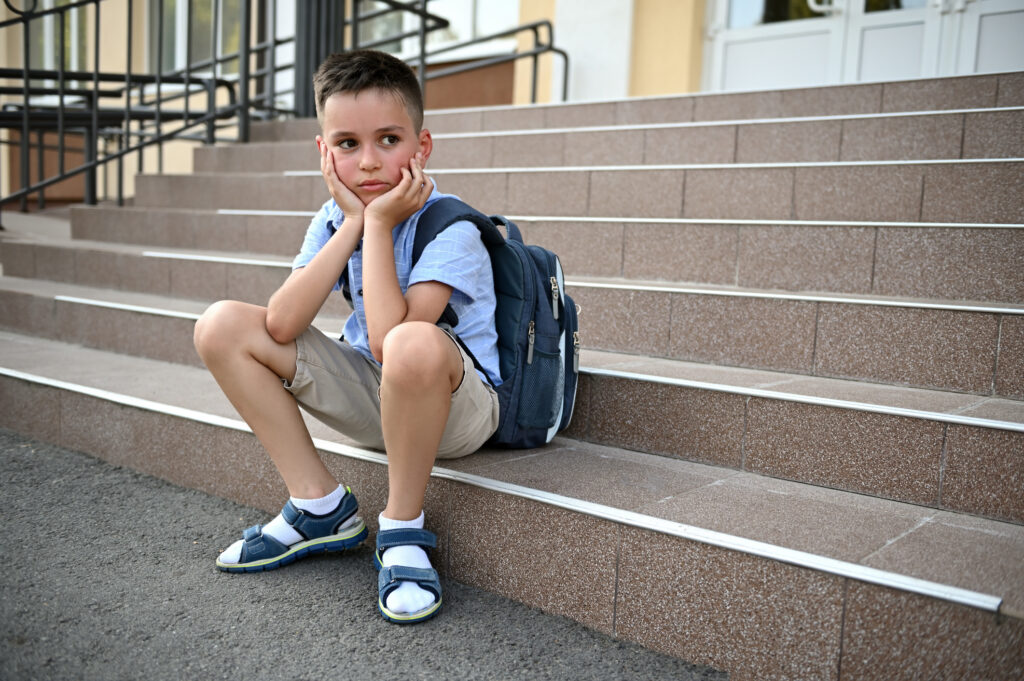
When your child doesn’t want to go to school, it can be confusing and concerning.
You might find yourself wondering what’s really going on—especially if they can’t quite explain it themselves.
The truth is, there are often many different reasons behind school reluctance. Some are obvious, while others are more subtle and unique to your child.
Understanding the Transition
Going to school means leaving you—their safe place—and entering a very different environment.
For some children, this transition can feel overwhelming.
Schools are busy, stimulating places, and not always easy for every child to settle into.
For a sensitive or gentle child, the school day can feel:
- busy, noisy, and crowded
- full of rules and expectations that may feel confusing
- socially complex, with children at different stages of emotional development
This can take a lot of energy to navigate.
What School Might Feel Like for Your Child
From a child’s perspective, school can include:
- managing friendships and social dynamics
- coping with other children’s behaviours
- trying to avoid getting into trouble
- keeping up with learning demands
- dealing with possible bullying or exclusion
For some children, there may also be learning challenges that make the classroom feel even more difficult.
Even if your child seems “fine” on the surface, they may be working very hard to cope internally.
Everyday Factors That Can Make a Difference
Sometimes, small daily rhythms can have a big impact on how your child feels about school.
It can help to look at:
- having a regular, calming bedtime routine
- getting enough sleep
- supporting good quality sleep (such as turning off devices at least an hour before bed)
- avoiding screens or TV in the morning
- creating a gentle, predictable morning routine with enough time to avoid rushing
When children feel rested and calm, they are better able to manage the demands of the day.
When Your Child Can’t Find the Words
The most important step is to talk with your child—and gently invite them to share how they’re feeling.
But sometimes, children can’t easily put their feelings into words.
Instead, their distress may show up as:
- anger or frustration
- stomach aches or headaches
- resistance or refusal
- emotional outbursts
These responses are very real for your child. They are not “just behaviour”—they are a way of communicating that something doesn’t feel right.
They are worth listening to and gently exploring.
A Gentle Next Step
If you’re unsure what’s behind your child’s reluctance to go to school, you don’t have to figure it out on your own.
Counselling and parent coaching can offer a calm, supportive space to explore what may be happening for your child.
Together, we can begin to understand the “why” behind the behaviour, and work toward changes that feel manageable and supportive for your family.
You’re not alone in this.