
Does your child often “act out” for no apparent reason?
Perhaps you are worried they might have signs of dyslexia, autism or ADHD or other signs of learning difficulties?
Maybe you are concerned that they are falling behind other children in reaching certain milestones?
Children often find it hard to tell us how they are feeling. Perhaps you’ve noticed your child:
- Often becomes angry or frustrated and hits out
- Yelling and screaming when the world feels too overwhelming
- Avoids going to school
- Collapses emotionally after a day at school
- Seems uncoordinated and bump into things
- Often says “huh” or “what”, and can’t remember instructions
- Finds it difficult to make friends
All of these behaviours can be signs of development delay.
What is Development Delay?
Early Development Started before Birth
Your child’s early development began before they were even born. While they were still in utero they were moving and listening to the sounds of your voice. After birth, your baby liked to keep you close. This secure attachment helped them to feel safe, and is the foundation for all later learning and development.
Gradually, your child became more independent, slowly gaining new skills, especially during floor play and tummy time, the building blocks for learning. The floor is baby’s first playground, and they love to have you close, delighting with them in their natural progression – rolling, tummy creeping, crawling and eventually walking.
Development Happens Naturally
Child development happens naturally in a pre-determined sequence, and can’t be rushed. Each stage depends on the completion of earlier stages. It’s a bit like building a tower of blocks. If the foundations aren’t firm, the rest of the tower will eventually topple.
Sometimes, however, this early development can be interrupted, and your child may have difficulties later on. You may have noticed that your child is not reaching milestones the same as other children the same age. Perhaps they are struggling to keep up at school, make friends or sit still and concentrate?
Since 2005 I have been supporting children with development delay. Addressing the underlying delays in early development improved learning, helping children to realise their potential. Parents and teachers noticed gains not only in the classroom, but also with friendships, and sporting achievements.
More recently my focus has been on supporting parents – helping you to help your child. My experience is that when we are able to build closer connections with our children, their behaviour changes. They become more settled. Feeling safe, they are then more open to learning.
An Holistic Approach to Addressing Symptoms of Autism, ADHD and Dyslexia
When a child is struggling with behaviour or learning challenges, it is is common to seek a diagnosis. However, not all parents choose this path. I suggest an alternative paradigm, stepping away from the traditional medical model of labels and pathologies, looking through the lens of development delay., su
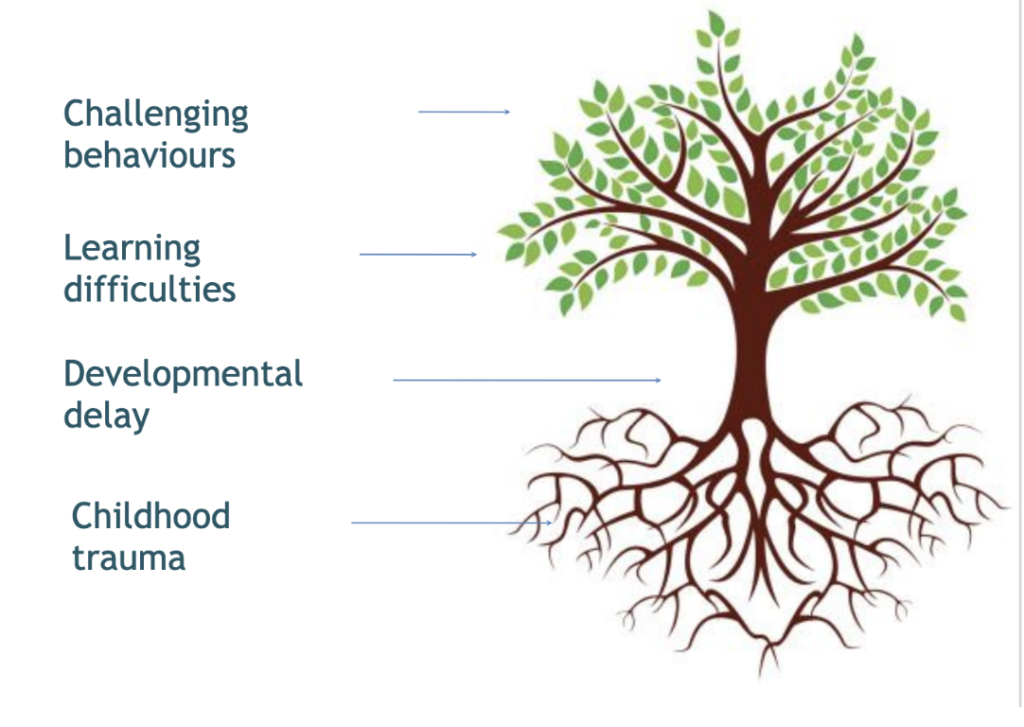
This Image of a Tree Comes to Mind
What we notice is the top of the tree, the behaviours, such as anxiety, meltdowns, aggression, abuse, daydreaming, restlessness, impulsivity, frustration, inability to focus, excessive fidgeting, poor social development, motor skills, learning difficulties.
Beneath the behaviours we find difficulties with learning, or taking in and processing information.
Below this are immaturities in early sensory and motor development that form the foundations for all later learning. They can be addressed through a sensorimotor development program designed to “fill in the gaps” in early disrupted development.
The “roots”, or underlying issues, are the aspects of the behaviour that we don’t see. These may include early traumatic events, family stories, cultural wounding and simply life in the twenty-first century. This is where counselling and parent support can be really helpful.
Support for Parents and Carers
No-one expects you to be perfect parents, but talking to someone who understands and really “sees” you can make a big difference. Experience shows that when we address the stresses and tensions in our own lives, our children’s behaviours improve, as if by magic!
Individual and/or Couples Counselling or Psychotherapy sessions offer you a place to talk privately about your concerns. Together we can work out the best way to help your child. Sometimes this may involve strategies for supporting your child’s overwhelm, as well as helping you to deal with your own triggered responses to their behaviour.
The Circle of Security Parenting Program
Many parents have found the internationally recognised Circle of Security Parenting program has helped them to build closer relationships with their children. When we can see the meaning behind a child’s behaviour, it becomes much easier to help them.
This parenting program is available both individually and for small groups. It can be helpful to share your parenting experiences with other parents, as there are always others facing exactly the same issues that you are.
Parents in recent classes have commented that:
- “Every parent should do this”
- “This program has changed our lives”
The Next Step
Talking to your counsellor is a good place to start if you are worried about your child’s early development.
Individual therapy is not always easy to access for many families, but fortunately there are some programs that have been effective in schools. You might like to talk to your child’s school about bringing a whole-class program to their school.
Related Articles
- Retained Primitive Reflexes
- Building Blocks for Learning
- Raising a Secure Child
- Circle of Security Parenting Support
- We Need to Feel Safe to Learn
Helpful Websites
- The Extra Lesson – individualised sensory integration and movement program
- Body to Brain Learning
- Integrating Thinking
- The Institute for Neurophysiological Psychology well-researched school program to address delays in early development