My Child is Scared of the Dark – what can I do?

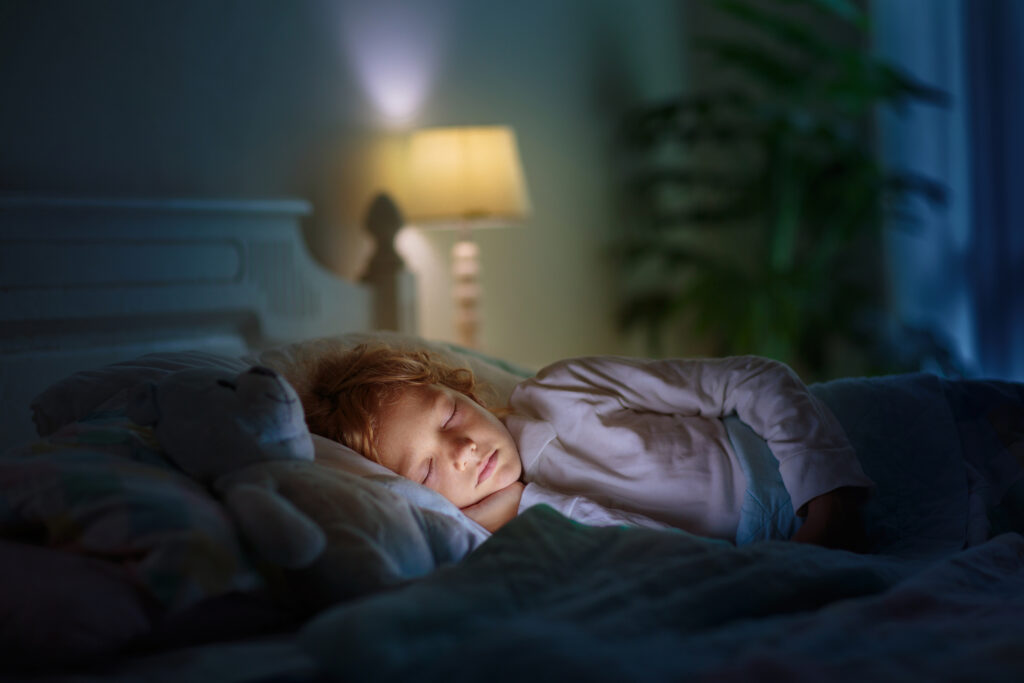
Child lying asleep in bed with a night light in the background.

Fear of the dark is very common in young children. While it might seem small from an adult perspective, for a child it can feel very real and overwhelming.

The most important thing to remember is this:
the fear is real to them, even if the cause isn’t.


Start with reassurance

Children need to know:

  • You are nearby
  • They are safe
  • They will be comforted if they need you

Simple reassurance, given calmly and consistently, goes a long way.


Create a sense of safety

A few small adjustments can make bedtime feel much less intimidating:

  • Leave a soft night light on
  • Keep the door slightly open
  • Stay with them for a few minutes after lights out

These small steps help bridge the gap between being awake and falling asleep.


Talk about their fears

Instead of dismissing the fear, gently explore it.

You might ask:

  • “What feels scary about the dark?”
  • “What do you imagine is there?”

When children feel heard and understood, their fear often begins to soften.


Use imagination in a helpful way

Imagination creates fear—but it can also solve it.

If your child is worried about monsters:

  • Try a “monster spray” (just water in a spray bottle)
  • Make it part of the bedtime routine

It sounds simple, but it gives children a sense of control—and that’s powerful.


The goal isn’t to eliminate fear overnight

Like most things, this is a gradual process.

With consistency, reassurance, and understanding, children begin to feel safer—and the fear naturally fades over time.

 

These might also help

👉Calmer Mornings and Bedtimes – tips for parents

👉 School Meltdowns and School Refusal: Understanding and Supporting your Child

👉Supporting Your Child Through Daily Transitions

All articles are based on personal in-clinic experience, and are supported by current research into brain science. They have been written for general education purposes and do not constitute personal advice. If you are a parent, I encourage you to seek professional support.

Share this post

About Rosalind

Rosalind is a PACFA Registered Clinical Counsellor, with over 20 years experience in working with children with challenging behaviours and learning differences. She brings an holistic, or whole person approach to supporting parents, helping them raise children able to realise their potential. to live happy and successful lives. Appointments are available in person at Moruya on the NSW south coast and online Australia-wide.

Free e-book download

Tips for Raising Happy Healthy Children

LATEST NEWS

More Updates

Learning and Behaviour

Why Children Need to Feel Safe to Learn

Many children struggle at school—not because they aren’t capable, but because they don’t feel safe enough to learn. When Learning ...

Learning and Behaviour

When School Feels Unsafe: Understanding Your Child’s Nervous System

 Many children struggle to learn in a traditional classroom. Some begin to avoid school, miss days, or even refuse to ...

Learning and Behaviour

Learning is More Than Just Trying Harder

 Many parents feel concerned when their child starts to struggle at school. You may have noticed: difficulty learning to read ...

Showing Slide 1 of 4