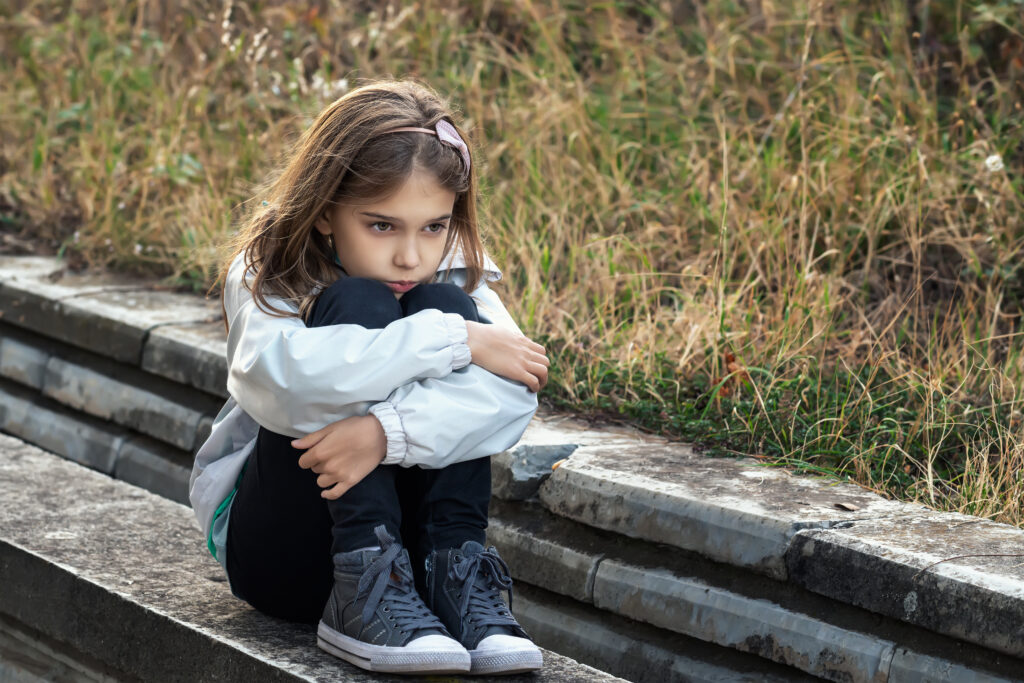
Signs of anxiety are not always obvious. Sometimes it shows up as annoying or difficult behaviour.
You might see:
- anger or frustration
- defiance or resistance
- shutting down or withdrawing
- foot, finger tapping
- jaw clenching or teeth grinding
- chewing (clothing, pens, pencils)
- disrupted sleep patterns
- continually needing reassurance
- school avoidance
- after school meltdowns
- worried, anticipating the worst
Looking Beneath the Behaviour
When a child feels overwhelmed, their behaviour is often their way of “acting out” what they are feeling.
They may not have the words, or the understanding, to explain what is happening for them.
Children respond best when their world feels safe.
Sudden or unexpected changes can make a child feel tense or anxious. You’ll notice this in their behaviour.
In these times they benefit most from your support and understanding. When they feel safe, seen and heard, your child’s nervous system can calm, and they become more open to listening and learning..
A Helpful Question
Instead of wondering:
- “Why are they acting like this?”
and trying to suppress or talk them out of what they are experiencing it can help to ask yourself:
- “What might they be feeling right now?”, or
- “What might they be needing?”
Often what they are needing most is your calm and safe presence.
What Can Help
Instead of joining them in their distress, it can help if you can first find a place of calm in yourself.
Taking some deep breaths with long, slow exhalations is a good place to start. you will probably notice yourself feeling better after only a couple of deep breaths.
When we feel calm, our children will generally become calmer too.
You can also help by:
- offering connection and support
- allowing space to decompress
- offering understanding and empathy
A Gentle Next Step
Our children’s behaviours can trigger similar feelings of frustration and anxiety in us.
If you are concerned, or the anxiety is interfering with everyday activities, it is a good idea to seek help.
Holistic counselling offers a safe space where you can share your concerns and feel supported, without fear of judgement or being told what to do.
You can feel heard as we work together to find solutions to help both you and your child.
Learn More
 Anxiety in Children: Understanding What Your Child may be Feeling
After School Meltdowns and School Refusal: Understanding and Supporting your Child