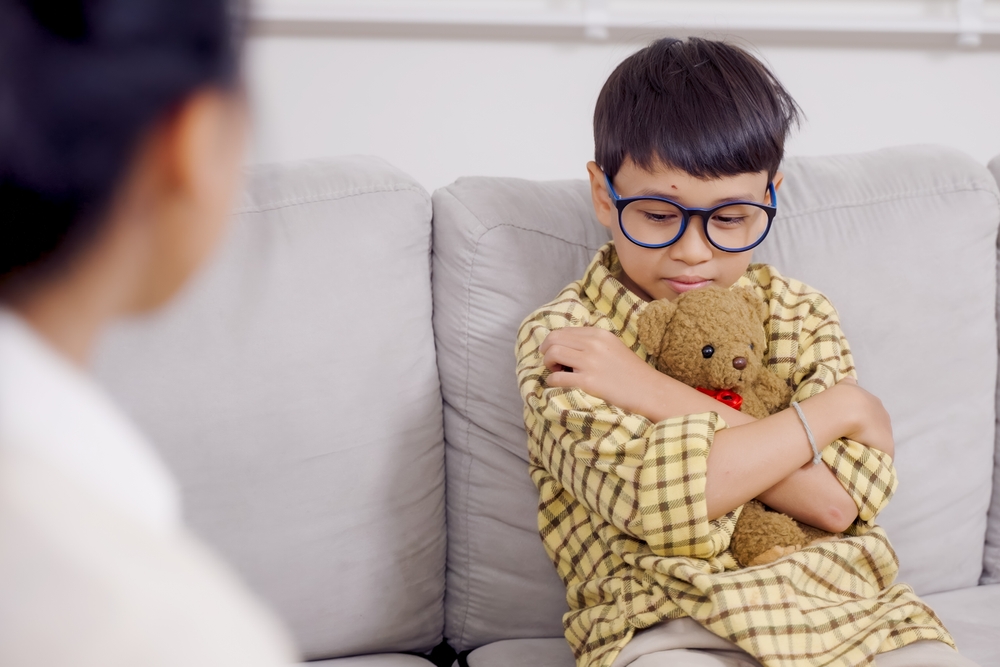
Many parents worry when their child seems anxious, overwhelmed, or easily upset.
You might notice:
- meltdowns or emotional outbursts
- tummy aches or headaches
- difficulty sleeping
- avoiding school
- clinginess or withdrawal
- anger, frustration
If this sounds familiar, you’re not alone.
What Does Anxiety Look Like in Children?
Anxiety doesn’t always look like worry.
In children, it often shows up as behaviour.
You may see:
- anger or frustration
- arguments
- opposition or defiance
- avoidance or refusal
- shutting down or withdrawing
- difficulty concentrating
Read more:
 Is my Child’s Behaviour Anxiety?
Why Do Children Become Anxious?
Anxiety is part of the body’s natural response to feeling stressed or overwhelmed. A small amount is normal, but it becomes a concern when daily living is affected.
It is the body’s way of scanning for possible danger, and getting ready to respond.
When a child’s nervous system goes on high alert, it becomes harder for them to:
- focus
- listen
- learn
- cope with everyday situations
Even when things appear safe to us, a child’s body may be telling a different story.
Read more:
Anxiety and the Nervous System
Children experience the world through their nervous systems.
When they feel safe, they are:
- calm
- connected
- open to learning in all its forms
When they feel overwhelmed, they may move into:
- stress or anxiety (fight/flight)
- shutdown (withdrawal)
These responses are automatic—they are not a choice.
Learn more:
Why is my Child Struggling at School?
Connections Between Anxiety, Behaviour and Learning
Anxiety doesn’t exist on its own.
It often overlaps with:
- behaviour challenges
- learning difficulties, such as dyslexia
- school struggles
- signs of ADHD
For example, a child who:
- can’t focus …may be feeling overwhelmed
- refuses to go to school … may be anxious about school
- acts out .. may be struggling to cope
Their behaviour could be saying “I can’t deal with this right now“
You may also find helpful:
Is it Anxiety, ADHD or Learning Difficulties?
When School Feels Too Much
School can be a common source of anxiety for children.
Busy classrooms, social pressures, and learning demands can feel overwhelming—especially for sensitive children.
You might notice:
- school refusal
- after school meltdowns
- difficult behaviours at home
Read more:
My child Doesn’t Want to go to School. Why?
Why your Child Falls Apart after School (and seems fine during the day)
Looking Beneath the Surface
Sometimes anxiety is linked to experiences in your child’s early years.
Children who are struggling with:
- sensory processing
- focus and attention
- reading and writing
- balancing emotions
may become overwhelmed more easily.
Learn more:
Foundations for Learning: Vision, Balance and Listening
Where to Start
If your child is anxious, it can be worrying, and also frustrating.
Even though you know your child is safe, their body is bringing them a different message.
A helpful first step is simply beginning to understand what might be happening beneath the surface.
You may find these articles helpful:
Anxiety in Children: Help for Parents
After School Meltdowns and School Refusal: Understanding and Supporting your Child
You’re Not Alone
If this feels familiar, please know you’re not alone.
Many parents find themselves trying to make sense of their child’s anxiety, wondering how best to support them.
I remember the worry and confusion of dealing with anxiety in my own children.
Small shifts in understanding can add up to big changes over time.
If you would like support in exploring what may be happening for your child, you’re welcome to give me a call.
Holistic Counselling and Parent Coaching is a good place to start
Read more here: