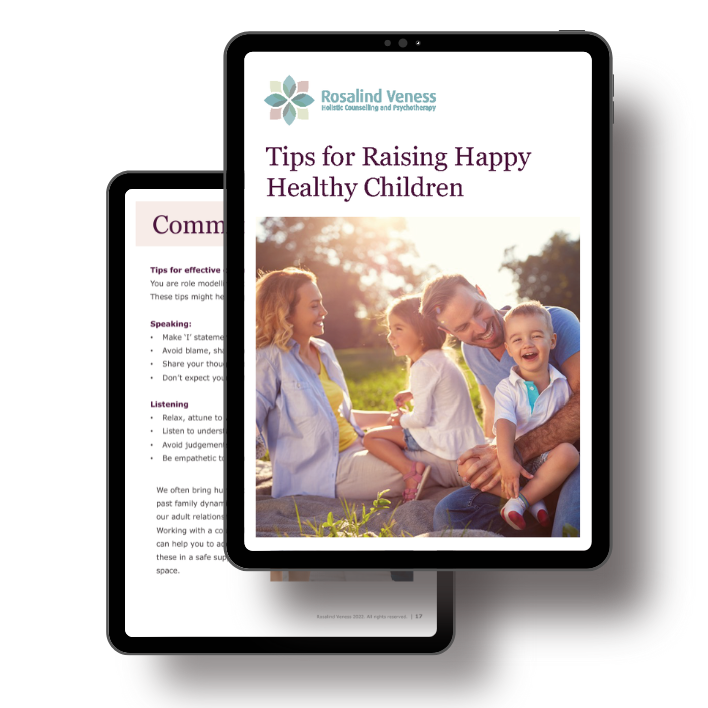

Gentle Help When Parenting Feels Hard
We all want to raise happy, healthy children.
But sometimes, our child’s behaviour can leave us feeling frustrated, overwhelmed and unsure what to do next.
Perhaps you’re finding yourself caught in the same struggles again and again. Maybe you want to parent differently from how you were raised, but when emotions run high, it’s difficult to know how to respond.
You may find yourself wondering whether you’re getting it right.
If this sounds familiar, you’re not alone.
Holistic counselling and parenting support offers a calm, supportive space to explore what’s happening — helping you understand your child, your own responses, and what might be needed to find a way forward that feels right for you and your family.
When Behaviour Feels Confusing
Children don’t come with a manual, and parenting can be much harder than we imagined.
We may have ideas about the kind of parent we want to be, only to discover that when our child is overwhelmed, angry or refusing to cooperate, it can be difficult to put those ideas into practice.
And sometimes our child’s behaviour simply doesn’t make sense.
A child who seems fine one moment may suddenly become emotional or reactive. A child who manages well at school may fall apart at home. A child who seems confident may become anxious, clingy or withdrawn.
When behaviour is difficult to understand, it can be tempting to focus on how to stop it.
But what if we became curious about what might be happening underneath?
Looking Beneath Behaviour
Rather than seeing behaviour simply as something that needs to be managed or controlled, we can begin to see it as a response to what a child is experiencing.
A child who is having a meltdown may be unsafe and overwhelmed. A child who becomes clingy may be seeking reassurance. A child who becomes angry may not yet have learnt another way to express what is happening inside.
This doesn’t mean that every behaviour is okay, or that children don’t need boundaries.
It means that alongside asking:
- “How do I stop this?”
we can also ask:
- “What is my child trying to communicate?”
When we begin to understand the meaning beneath behaviour, what once felt frustrating can start to make more sense.
Parenting Brings Us Our Own Stories Too
Our children don’t just bring their own experiences into the family. Parenting can also bring us face-to-face with our own history.
Perhaps you want to do things differently from the way you were parented. Maybe you find yourself responding to your child in ways that surprise you, or becoming overwhelmed by feelings that seem bigger than the situation itself.
Sometimes we can become caught in patterns without really understanding where they came from.
Having a safe space to talk about these experiences can help us become more aware of our own responses, as well as our child’s.
There is no expectation that you should have everything sorted out.
You are doing the best you can with what you know and what you have experienced.
Sometimes we simply need someone to walk alongside us while we develop a deeper understanding of ourselves and our children.
Supporting the Parent
Parenting can be exhausting.
You may be worried about your child’s behaviour, emotional wellbeing, friendships, learning or anxiety. You may be feeling stressed yourself, wondering how much longer you can keep going, or simply wishing family life felt a little calmer.
Supporting you as a parent is an important part of my work.
When we have somewhere to bring our concerns — somewhere we can feel seen, heard and understood rather than judged or told what to do — it can become easier to pause, reflect and find our own way forward.
Sometimes the best way to support our children is to begin by supporting ourselves.
When You Might Be Looking for Support
Parenting support may be helpful if you’re:
struggling with big emotions, meltdowns or challenging behaviour
concerned about anxiety, overwhelm or school difficulties
wondering about ADHD, dyslexia or other learning challenges
feeling exhausted, stressed or overwhelmed by parenting
finding yourself caught in patterns you would like to change
wanting to parent differently from how you were parented
unsure how to respond to what your child is experiencing.
You don’t need to know exactly what the problem is before reaching out.
it is enough to simply feel like you want to change something in your life.
We can begin with where you are.
What Happens in a Parenting Support Session?
Sessions usually run for around 50 minutes.
Our first session is a chance to get to know each other and talk about what’s been happening. We can explore your concerns, your family circumstances and what you would like support with.
My role isn’t to judge you or tell you what you should do.
Instead, I offer a space where you can slow down, make sense of what is happening and explore what might feel helpful for you and your family.
We move at a pace that feels right for you. Real change takes time, and there is no need to have everything worked out before you begin.
Circle of Security Parenting
I also offer the Circle of Security Parenting program, an eight-week relationship-based program that supports parents to understand their child’s needs and strengthen secure attachment.
You can learn more about Circle of Security Parenting if you’d like to explore this approach.
A Gentle Next Step
No parenting concern is too small — or too big — to bring to counselling.
You don’t have to wait until things become overwhelming, and you don’t need to have all the answers before reaching out.
Sometimes it is enough to begin with a simple question:
- “What’s happening here, and what might my child — and I — need?”
If something you’ve read here resonates with you, you’re welcome to get in touch.
We can start with a phone call and explore what’s been happening and what kind of support might feel helpful for you and your family.
You May Also Find Helpful
 When Parenting Feels Overwhelming – small ways to care for yourself