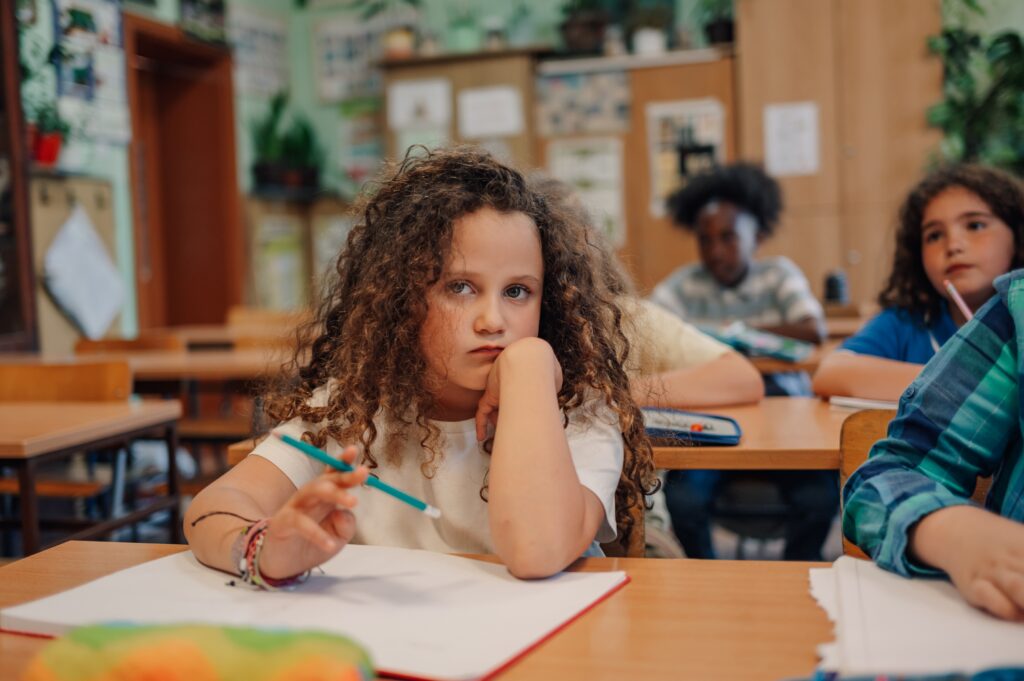
It’s worrying when you can see your child is doing their best, but still falling behind with reading, writing and spelling.
You know your child is smart and capable – but they are falling behind no matter how much effort they are putting in.
Perhaps you’re feeling stuck, as I once did, wondering how best to help?
Maybe you are confused by so much conflicting advice – but worry about what might actually be most helpful.
You may have already tried things such as:
- encouraging your child to practise more
- reminding them to try harder
- extra homework
- additional tutoring
Yet despite everyone’s best efforts, progress may still feel slower than expected.
Smart but Feeling Dumb
One child described her experience as “smart but feeling dumb“.
You may have noticed your child is starting to realise what is happening. Perhaps their self belief is dropping, and they are losing interest in going to school.
Before we jump to conclusions, it can help to step back and look at the bigger picture.
Looking Beneath the Surface
The answer can lie in looking beneath what appears on the surface
What you see is a child doing their best…
but underneath this is often a child whose readiness for reading, writing, and ability to feel comfortable in a classroom is still developing.
Sometimes children are putting in enormous effort already.
No matter how hard they try, and how much they want to please you, it is still not happening.
What they need may not be more pressure, but support in developing the skills that underpin learning.
Each Child is Unique
The good news is that there is much we can do to help.
Every child is unique, and there are many factors that can influence learning, behaviour, emotions, and wellbeing.
In my role as a development practitioner, I look for signs that early stages of development are incomplete.
Here are some school readiness questions you might like to consider…
Physical Development
- Has your child’s hearing been checked recently?
- Has your child seen an optometrist lately?
Sensory and Motor Development
- How long can they balance on one foot with their eyes closed? (sense of balance)
- How well can they listen and remember what you have said? (listening or auditory processsing)
- Do they often say “huh” or “what”? (listening or auditory processing)
- Can they recognise shapes, letters and copy from a blackboard? (visual processing)
 Foundations for Learning: Vision, Balance and Listening
Coordination and Core Strength
- Can they sit still without slouching across the desk? (core strength)
- How well can they catch and throw a ball? (hand-eye coordiantion)
- Can they kick a ball from a standing position? (sense of balance)
- Can they follow a moving target with their eyes without moving their head? (visual motor skills)
- Can they bring their eyes together to focus on a single point? (visual motor skills)
Building the Foundations for Learning
School Issues
- Do they enjoy school?
- Do they have close friends at school?
- Is bullying a concern?
- Do they often refuse to go to school?
- What are they like after school – angry, frustrated or withdrawn and quiet?
Understanding bullying – gentle support for parents and children
After School Meltdowns and School Refusal: Understanding and Supporting your Child
Home Life
- Have they seen you pick up a book and read for pleasure?
- Do you read to them?
- Is screen time an issue in your home?
- Do they play outdoors regularly – beach, park, sport?
- Do they use imagination in their play, act out characters from stories?
- Do you have a regular bedtime routine?
- Are mornings easy or full of stress?
- Does your child wake happy or grumpy?
- Do they engage in conversations – at the dinner table, in the car?
- Can they use words to express their feelings?
Emotional Wellbeing
- Does your child seem happy most of the time?
- Have you noticed increased anxiety or worry?
- Are they becoming easily frustrated or overwhelmed?
- Do they seem confident in themselves and their abilities?
- Are they able to talk about their feelings – or are they more likely to use their bodies and act them out?
Anxiety in Children: Understanding What Your child may be Feeling
How You Can Help
For over 20 years I have supported children who were struggling with learning by exploring the developmental foundations that support reading, attention and classroom learning.
Today I prefer to work with parents, offering support and guidance when you feel you are struggling.
Some things you can do at home include:
- Offer Encouragement
- Acknowledge effort
- Make tasks small and achievable
- No rush, no pressure
- Let them know you value them for who they are, rather than what they achieve
- Find things that interest your child – learning can happen anywhere – not just in a classroom
Talk to the school if you are concerned.
You can ask how your child is in the classroom:
- can they focus and pay attention?
- can they sit still?
- do they slouch over the desk?
- can they copy from the blackboard?
- do they have a friendship circle?
- is bullying a concern?
- do they seem easily overwhelmed?
- do they struggle with transitions?
- can they follow spoken instructions?
Many of these are signs of Retained Primitive Reflexes, and can be addressed with a reflex inhibition program.
Why is my Child Struggling at School – understanding early development and primitive reflexes
You may also wish to explore whether your child’s school offers additional developmental, sensory or movement-based support programs.
Looking after You
It’s worrying when you want to help, but feel stuck. Sometimes simply talking to someone who understands can make a big difference.
Looking after your own wellbeing is important – as they say, “you can’t pour from an empty cup”.
I’ve been there, and know what it’s like to be puzzled about your child’s learning and behaviour, and looking for answers.
These Might Help
Counselling Support for Parents
How to Support Your Child’s Early Learning through Play
After School Meltdowns and School Refusal: Understanding and Supporting your Child